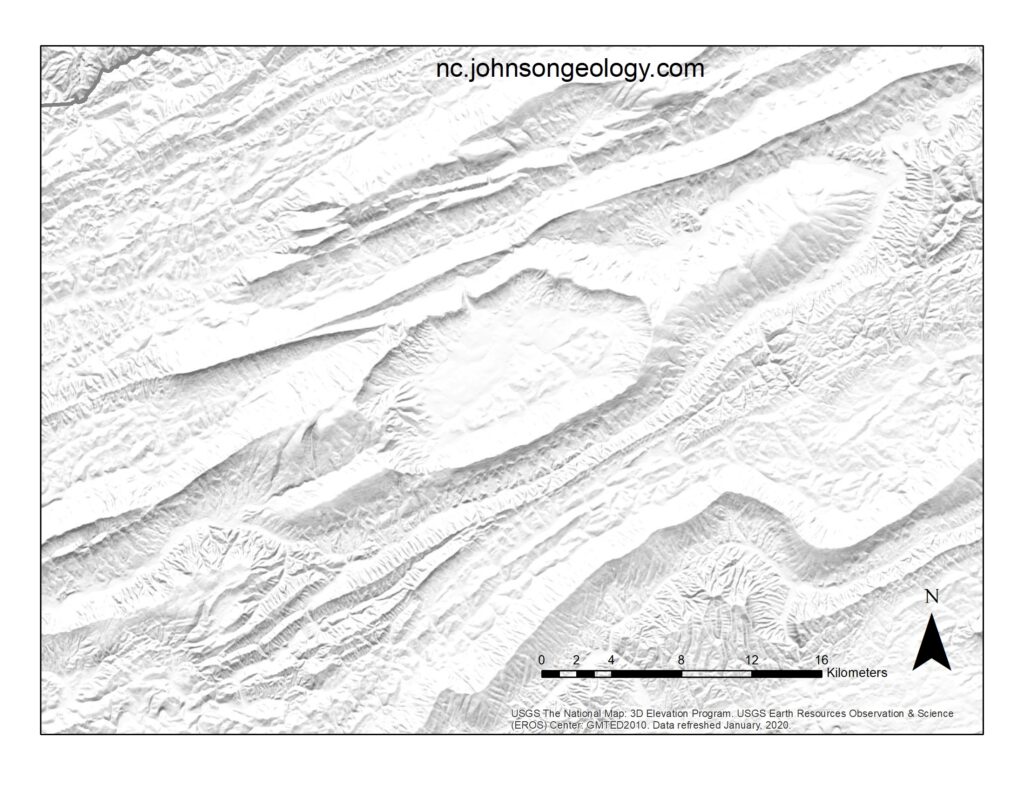
While the Blue Ridge in North Carolina comprise metamorphic rocks that formed deep under the Appalachian Mountains, further to the north the Appalachians look quite different. Here, the mountain range consists of folded sedimentary rocks that make up the Valley and Ridge Province. While the Valley and Ridge Province it truly its own physiographic province, we lump it in here with the Blue Ridge because not much of the Valley and Ridge extends into North Carolina.
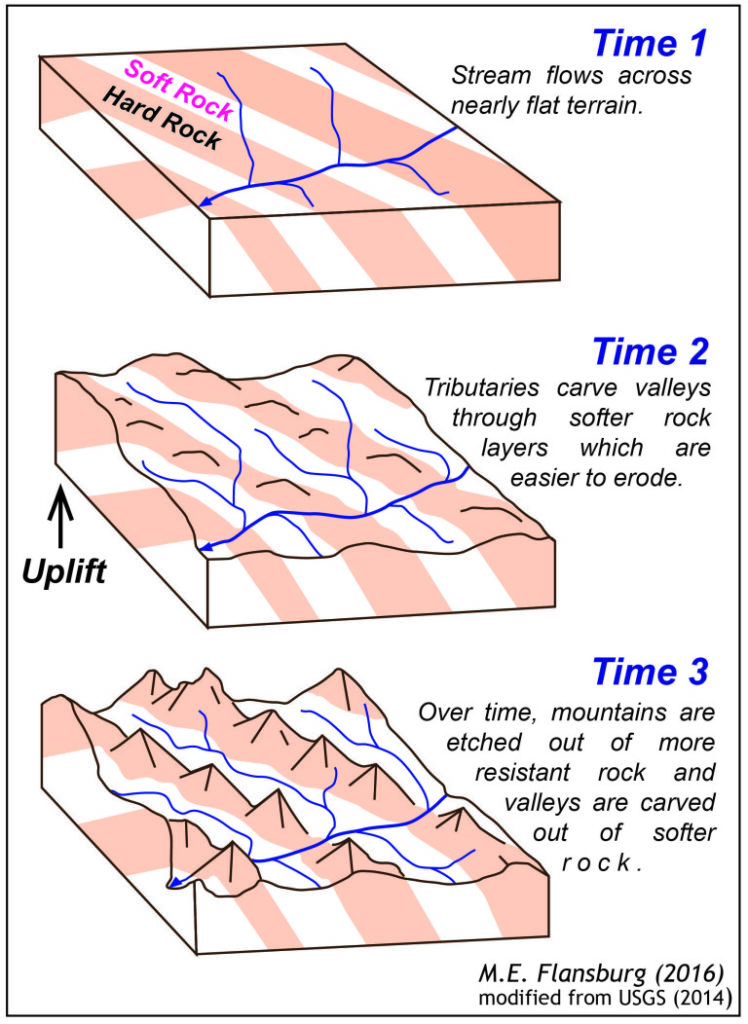
When tectonic plates collide, the crusts compress and squish together in a way that results in bedrock that looks wavy. In these wave patterns, the top of the “wave” is an anticline, and the bottom is a syncline. The sedimentary rocks that make up the folds will eventually begin to erode but at different rates. Harder (or more chemically resistant) material will be more difficult to erode and thus will remain in place while softer materials will be carved more quickly. This can form small valleys where the soft material has been eroded and peaks where the tougher material remains.
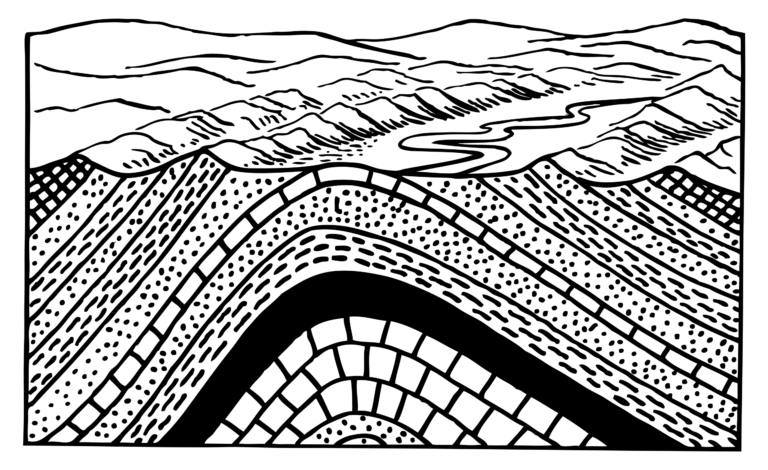
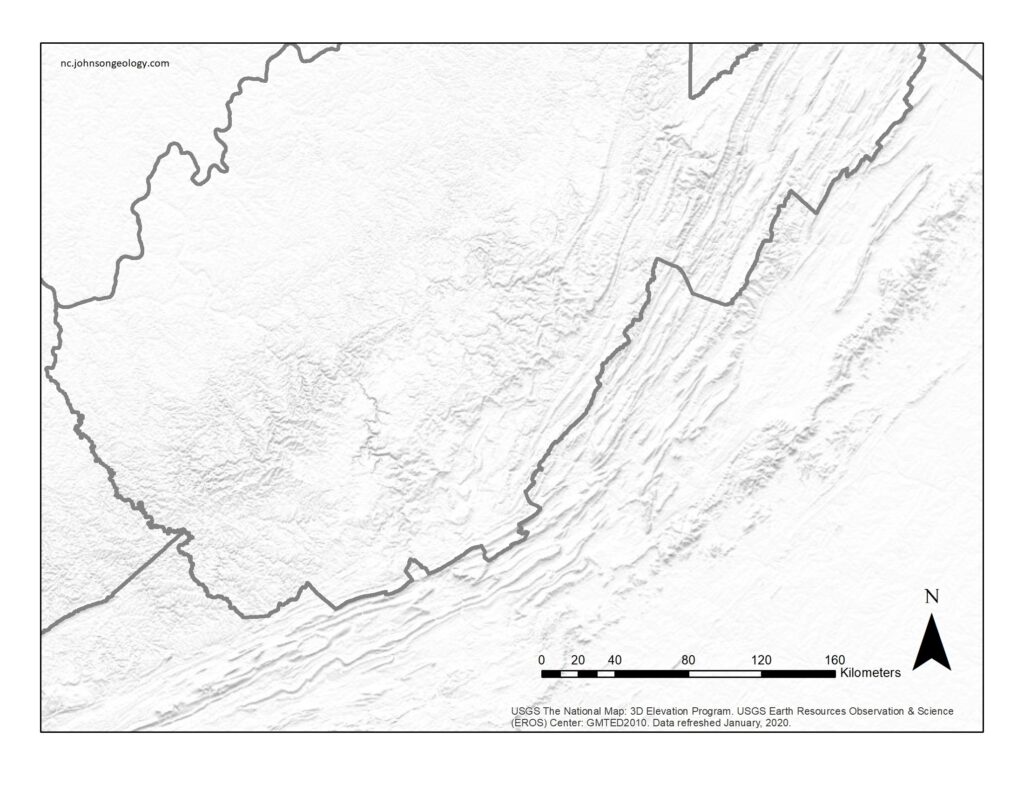
Stretching from Tennessee to Pennsylvania, Valley and Ridge is exactly what it sounds like – a series of valleys and ridges created by folds of various bedrock types.
If the top erodes off a fold and the underlying rock is softer, a unique shape can result. These breached folds can be very distinct. Burke’s Garden Virginia is an example of a breached anticline where the middle is exposed like a soft-boiled egg.